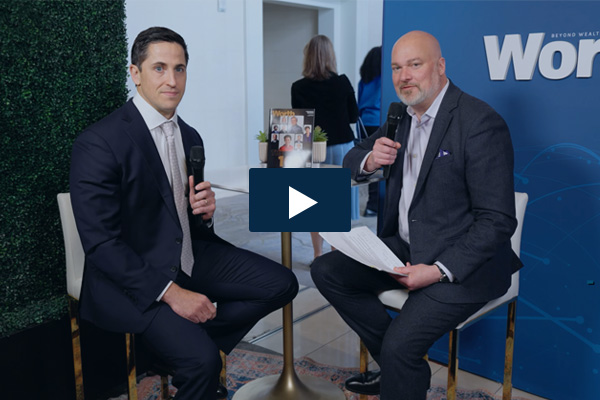
In this conversation from GlobalAlts Miami, Michael Bennett, Head of Corporate Development at Roc360, sits down with Hank Strmac to unpack the evolving opportunity in residential real estate.
Michael walks through Roc360’s business model, its focus on the single-family rental market, and how the firm bridges the gap between institutional capital and small-scale investors. As demand grows for exposure to what is widely considered one of the largest, deepest, and most resilient asset classes – the single-family home – he explains why gaining access isn’t as straightforward as it may seem.
This discussion offers a clear look at how Roc360 is helping investors navigate and participate in a complex but highly compelling market.
Video Transcript
We are winding down Wednesday here at Global Alts
Miami .
I’m happy to be joined by Mike Bennett from ROC.
ROC is an integrated real estate investing and lending
platform that focuses on residential real estate primarily and have done
over billion in loans. How are you, Mike?
Great, Hank. Happy to be here.
How was your day at Global Alts?
Busy but productive day.
Awesome. Good to hear.
Give us a sense of what ROC encompasses.
Sure. We are a direct lender and investment manager
for professional real estate investors all over the United States.
The focus of our lending programs is really threefold.
We lend to those that renovate existing houses, we lend to those that build
new single-family homes, and we lend to those that manage rental properties across
the country.
Residential real estate has been in the headlines in a variety of facets in the
past couple of years, mainly from an institutional presence that
has really taken interest in the space.
Curious how you work with the institutional community and those that
aren’t classified as institutional community.
Yeah, look, I think that the
expression and the institutional interest in the space, right, is really
manifested in wanting to gain access to what is
largely recognized as one of the world’s largest and deepest and most
resilient asset classes, right? That’s the single-family home.
The challenge is that investing in single-family homes is
actually quite difficult to do despite its size.
If you think about the market being somewhere in the context of $ trillion of
aggregate value, the reality is almost % of
homes are owned by the inhabitants that live in them.
Mm-hmm.
The remaining % that is historically rented in this country
is very fractionally owned, right?
And so reality as we see it is that institutional penetration
into that, what we call SFR, the single-family rental category, is
relatively muted. And you’ve heard that, and you’ve seen a lot of that come
out in recent days here with the rhetoric politically.
On the flip side, the or nearly trillion in
debt against America’s housing stock is largely agency paper-
Mm.
secured by the government agencies that are a backstop for
lenders to the mortgage market. So the reality there is that while
it’s sound from a credit perspective, it often doesn’t clear the
threshold for returns that most institutional allocators are seeking.
And so I think where we fill that void is twofold.
One, we provide a really unique and differentiated investment
experience to the institutional allocator.
But also we do so by fulfilling a really essential spot,
right? Where we’re really proud of the sponsors that we’re able to help fulfill
their own version of the American dream, right?
Sure.
With their own housing journey and being able to renovate existing housing stock,
which is increasingly aging. Being able to build
new housing stock, which is sorely needed.
And then to be able to provide the vast majority of rental properties that
Americans live in.
Sure. Let’s double-click on each of those.
Talk a little bit about the unique and differentiated experience that
you work with the institutional community.
Sure. Look, our pitch to the institutional
community is that
you can own or have a stake in a wide and
diversified swath of homes across America.
Our fund today, over , properties-
Mm.
right, across states, to over , different sponsors.
There’s a widespread level of diversification, both geographically, sponsor, and
property type.
And it’s also attractive from a capital perspective.
There’s a high degree of
fragmentation and operational friction in the
type of lending that we provide. And so with that comes a pretty
consistent yield spread, right? But at the same time, what we believe
to be fair pricing to the sponsors that obtain the capital to do the work that they
do.
Sure. And then how about on the
smaller investor side? How do you work with folks that you would not
consider institutional?
Yeah, and that’s the majority of our business.
Everything that we do is in the small and medium-sized
entrepreneurs that are out there, again, renovating, building, and
renting America’s housing stock.
Sure.
Right? And that’s a really neat facet of the job that we kind of view as a
triple-win scenario, right? We’re supporting local entrepreneurs in local
housing markets to improve the housing stock in that community.
And then we’re providing this return experience for the institutional investor-
Yeah
… that we think would have a more difficult time than not accessing
these markets directly if our strategy didn’t exist.
How are those smaller borrowers financing
those types of acquisitions that you’re helping?
Yeah. It comes through us. It comes through our lending
programs, and again, they are experts at
the sourcing of opportunities and the real important work of
renovation and new construction that needs to take place.
Our job is to facilitate that commerce.
Sure.
Our job is to be the lender for them in those scenarios, both in terms
of the correctly priced loan, the speed of execution
that we can provide, and the certainty of capital, importantly, that we can
bring to these entrepreneurs when they’re working on America’s
housing stock.
What opportunities in the residential market are you excited about,
even just this year?
Yeah, sure. Look, there’s a consistent
demand for renovated turnkey housing, right?
So the largest opportunity for us consistently is to
support renovation of existing housing stock.
Every year,
a large number of homes across the country fall into some state of obsolescence.
We recognize, and I think it’s widely recognized, that there is a shortage
of not just housing in general, but affordable and attainable
housing across the country. And so the first step towards mitigating a supply
shortage is protecting and renovating the existing supply that you
have. And so that’s a critical function that we’re perpetually excited about.
The other facet of the business that is really exciting too is the
new construction of housing across the country, and particularly for
the small and medium-sized home builders
that don’t have ready access to financing that some of the larger publicly
traded or more traditional home builders might.
Yeah. How big is that market, the groups that don’t
have access to that level of financing,
that the larger publicly traded-
Sure. It’s half of the market. And importantly, it’s not just the quantum
that matters, it’s also where they build that matters.
So the smaller and medium-sized home builders we find tend to operate in the
already densely populated neighborhoods where there maybe are not
large tracks or swaths of land that they can acquire and develop large
communities on as a public home builder might desire.
Yeah.
Our view is that supporting the smaller and medium-sized not just is a
quantity issue, but it’s a location issue.
So the places where we most sorely need the homes
is logically where some of the larger builders can’t participate in new
construction.
Sure.
And so by enabling the small and medium-sized builder, we can solve their problem
from a capitalization perspective, and we can also really promote new growth
of housing supply in those areas.
Yeah. What locations does ROC tend to focus on in the
US?
Sure. We’re a nationwide lender, meaning we’re generally active in all states
across the country. If you look at the portfolio,
where are the
oldest homes? Where are the densest population centers?
Those are the preferences-
Yeah
… in terms of us, and where we just gravitate to finding more business than not.
And so you typically see a lot of business in the Northeast, in the Midwest, in
parts of the South and parts of the West Coast.
It really is a national footprint, but we prioritize those deep
liquid markets for housing
where you’ve got large population centers
and really where there’s that aging housing stock in need of renovation.
When you’re at an event like Global Alts talking to the
institutional community about your strategy and your business,
how do you think about how institutional
LPs could position your strategy in their
portfolios?
Sure. I think first and foremost, again, you’re allocating
alongside one of the globe’s largest asset classes that is US
single family housing.
This is an alternative fixed income product, right?
We are lenders to a diverse array of sponsors
that do the great work of renovating and building new homes in the country.
And so I think for the institutional allocator, where we get excited is
both the ability to educate on what may be a new product for their portfolio,
but it’s something that sits alongside an industry which is decades or hundreds of
years old.
Sure.
And so when you have that confluence of both stability, resilience, and
size of market, alongside the ability to present something
that is maybe novel, diversifying, and differentiated,
while providing what we think is an attractive return to the portfolio,
that’s where I think most of the conversations become exciting for us.
Sure. So we’ve got time for one more question, Mike.
And just continuing along, being here at Global Alts Miami
, and the conversations you’ve had today, I’m curious what
insights or trends you’ve gleaned from all the
conversations that you’ve had with LPs about
real estate broadly.
Sure. I think it includes real estate, but it’s also
there’s a larger shift underway towards a focus on
asset allocation towards essential sectors of the economy,
towards hard assets that are maybe not as replaceable
as other asset classes by the advent of new technologies.
No one is averse. We are large scale users and leaders in
innovation and technology for our discipline.
But the core of what we do is really focused on the essential use parts of
the economy like housing.
Sure. Claude Code’s not building a house anytime soon.
It might, but we need it to do more.
Excellent. Well, thanks so much for taking some time.
Thank you.
We are winding down Wednesday here at Global Alts
Miami .
I’m happy to be joined by Mike Bennett from ROC.
ROC is an integrated real estate investing and lending
platform that focuses on residential real estate primarily and have done
over billion in loans. How are you, Mike?
Great, Hank. Happy to be here.
How was your day at Global Alts?
Busy but productive day.
Awesome. Good to hear.
Give us a sense of what ROC encompasses.
Sure. We are a direct lender and investment manager
for professional real estate investors all over the United States.
The focus of our lending programs is really threefold.
We lend to those that renovate existing houses, we lend to those that build
new single-family homes, and we lend to those that manage rental properties across
the country.
Residential real estate has been in the headlines in a variety of facets in the
past couple of years, mainly from an institutional presence that
has really taken interest in the space.
Curious how you work with the institutional community and those that
aren’t classified as institutional community.
Yeah, look, I think that the
expression and the institutional interest in the space, right, is really
manifested in wanting to gain access to what is
largely recognized as one of the world’s largest and deepest and most
resilient asset classes, right? That’s the single-family home.
The challenge is that investing in single-family homes is
actually quite difficult to do despite its size.
If you think about the market being somewhere in the context of $ trillion of
aggregate value, the reality is almost % of
homes are owned by the inhabitants that live in them.
Mm-hmm.
The remaining % that is historically rented in this country
is very fractionally owned, right?
And so reality as we see it is that institutional penetration
into that, what we call SFR, the single-family rental category, is
relatively muted. And you’ve heard that, and you’ve seen a lot of that come
out in recent days here with the rhetoric politically.
On the flip side, the or nearly trillion in
debt against America’s housing stock is largely agency paper-
Mm.
secured by the government agencies that are a backstop for
lenders to the mortgage market. So the reality there is that while
it’s sound from a credit perspective, it often doesn’t clear the
threshold for returns that most institutional allocators are seeking.
And so I think where we fill that void is twofold.
One, we provide a really unique and differentiated investment
experience to the institutional allocator.
But also we do so by fulfilling a really essential spot,
right? Where we’re really proud of the sponsors that we’re able to help fulfill
their own version of the American dream, right?
Sure.
With their own housing journey and being able to renovate existing housing stock,
which is increasingly aging. Being able to build
new housing stock, which is sorely needed.
And then to be able to provide the vast majority of rental properties that
Americans live in.
Sure. Let’s double-click on each of those.
Talk a little bit about the unique and differentiated experience that
you work with the institutional community.
Sure. Look, our pitch to the institutional
community is that
you can own or have a stake in a wide and
diversified swath of homes across America.
Our fund today, over , properties-
Mm.
right, across states, to over , different sponsors.
There’s a widespread level of diversification, both geographically, sponsor, and
property type.
And it’s also attractive from a capital perspective.
There’s a high degree of
fragmentation and operational friction in the
type of lending that we provide. And so with that comes a pretty
consistent yield spread, right? But at the same time, what we believe
to be fair pricing to the sponsors that obtain the capital to do the work that they
do.
Sure. And then how about on the
smaller investor side? How do you work with folks that you would not
consider institutional?
Yeah, and that’s the majority of our business.
Everything that we do is in the small and medium-sized
entrepreneurs that are out there, again, renovating, building, and
renting America’s housing stock.
Sure.
Right? And that’s a really neat facet of the job that we kind of view as a
triple-win scenario, right? We’re supporting local entrepreneurs in local
housing markets to improve the housing stock in that community.
And then we’re providing this return experience for the institutional investor-
Yeah
… that we think would have a more difficult time than not accessing
these markets directly if our strategy didn’t exist.
How are those smaller borrowers financing
those types of acquisitions that you’re helping?
Yeah. It comes through us. It comes through our lending
programs, and again, they are experts at
the sourcing of opportunities and the real important work of
renovation and new construction that needs to take place.
Our job is to facilitate that commerce.
Sure.
Our job is to be the lender for them in those scenarios, both in terms
of the correctly priced loan, the speed of execution
that we can provide, and the certainty of capital, importantly, that we can
bring to these entrepreneurs when they’re working on America’s
housing stock.
What opportunities in the residential market are you excited about,
even just this year?
Yeah, sure. Look, there’s a consistent
demand for renovated turnkey housing, right?
So the largest opportunity for us consistently is to
support renovation of existing housing stock.
Every year,
a large number of homes across the country fall into some state of obsolescence.
We recognize, and I think it’s widely recognized, that there is a shortage
of not just housing in general, but affordable and attainable
housing across the country. And so the first step towards mitigating a supply
shortage is protecting and renovating the existing supply that you
have. And so that’s a critical function that we’re perpetually excited about.
The other facet of the business that is really exciting too is the
new construction of housing across the country, and particularly for
the small and medium-sized home builders
that don’t have ready access to financing that some of the larger publicly
traded or more traditional home builders might.
Yeah. How big is that market, the groups that don’t
have access to that level of financing,
that the larger publicly traded-
Sure. It’s half of the market. And importantly, it’s not just the quantum
that matters, it’s also where they build that matters.
So the smaller and medium-sized home builders we find tend to operate in the
already densely populated neighborhoods where there maybe are not
large tracks or swaths of land that they can acquire and develop large
communities on as a public home builder might desire.
Yeah.
Our view is that supporting the smaller and medium-sized not just is a
quantity issue, but it’s a location issue.
So the places where we most sorely need the homes
is logically where some of the larger builders can’t participate in new
construction.
Sure.
And so by enabling the small and medium-sized builder, we can solve their problem
from a capitalization perspective, and we can also really promote new growth
of housing supply in those areas.
Yeah. What locations does ROC tend to focus on in the
US?
Sure. We’re a nationwide lender, meaning we’re generally active in all states
across the country. If you look at the portfolio,
where are the
oldest homes? Where are the densest population centers?
Those are the preferences-
Yeah
… in terms of us, and where we just gravitate to finding more business than not.
And so you typically see a lot of business in the Northeast, in the Midwest, in
parts of the South and parts of the West Coast.
It really is a national footprint, but we prioritize those deep
liquid markets for housing
where you’ve got large population centers
and really where there’s that aging housing stock in need of renovation.
When you’re at an event like Global Alts talking to the
institutional community about your strategy and your business,
how do you think about how institutional
LPs could position your strategy in their
portfolios?
Sure. I think first and foremost, again, you’re allocating
alongside one of the globe’s largest asset classes that is US
single family housing.
This is an alternative fixed income product, right?
We are lenders to a diverse array of sponsors
that do the great work of renovating and building new homes in the country.
And so I think for the institutional allocator, where we get excited is
both the ability to educate on what may be a new product for their portfolio,
but it’s something that sits alongside an industry which is decades or hundreds of
years old.
Sure.
And so when you have that confluence of both stability, resilience, and
size of market, alongside the ability to present something
that is maybe novel, diversifying, and differentiated,
while providing what we think is an attractive return to the portfolio,
that’s where I think most of the conversations become exciting for us.
Sure. So we’ve got time for one more question, Mike.
And just continuing along, being here at Global Alts Miami
, and the conversations you’ve had today, I’m curious what
insights or trends you’ve gleaned from all the
conversations that you’ve had with LPs about
real estate broadly.
Sure. I think it includes real estate, but it’s also
there’s a larger shift underway towards a focus on
asset allocation towards essential sectors of the economy,
towards hard assets that are maybe not as replaceable
as other asset classes by the advent of new technologies.
No one is averse. We are large scale users and leaders in
innovation and technology for our discipline.
But the core of what we do is really focused on the essential use parts of
the economy like housing.
Sure. Claude Code’s not building a house anytime soon.
It might, but we need it to do more.
Excellent. Well, thanks so much for taking some time.
Thank you.